Over the past few months, we've been tracing a subtle but significant cultural shift, one that’s less about accumulation and more about alignment. In “The Ritual Economy” (Mar 18), we explored how Indian consumers were turning beauty into a self-soothing ritual, reclaiming daily routines as acts of presence. Then in “ Quiet Signals” (Apr 21), we observed the rise of emotional fluency, where phrases like “rest era” and “protecting my peace” became soft rebellions against burnout.
Today, we return to this unfolding narrative with a sharper lens, not just on the rituals, but the emotional undercurrent driving them.
Across several Indian homes, we are witnessing the early signs of a future emotion: Witherwill, a term coined by John Koenig in The Dictionary of Obscure Sorrows, describing the deep longing to be free from responsibility. While its time is forecasted to peak in 2027, we’re already seeing its outlines in how urban Indians are reclaiming control over pace, pressure, and presence.
This edition explores how, in a country moving ever faster, the act of slowing down is becoming both a cultural signal and a consumer coping mechanism - and how this affects life at home.
From Bandra to Indiranagar, a new desire is emerging inside India’s most affluent city homes: the desire to slow down. Not retreat, but re-root.
For Maya, a strategist in Bengaluru, that means fumigating her apartment with neem leaves before each monsoon. For Kabir, a designer in Delhi, it’s starching his khadi by hand every Sunday. These aren’t productivity hacks. They’re rituals of presence - tiny acts of care that help Indian consumers feel homed again, in a world moving too fast.
Urban India is Upgrading - But Also Unraveling
India’s luxury landscape is accelerating. The share of luxury homes in total residential sales surged to 28% in 2024, up from 16% pre-pandemic (Anarock Research, 2024). Car ownership in urban metros is rising rapidly, with Mumbai seeing a 10% growth, and Delhi 7.8% in just one year (MoRTH, 2024). India is also now the fifth-largest global market for luxury watches and bespoke jewellery, driven by brands like Cartier, Patek Philippe, and Indian heritage labels (Statista, 2024).
And yet, the emotional climate tells a different story. According to an Ipsos Urban India survey (2024), 53% of Indian urban consumers report daily stress, while 25% experience prolonged sadness or hopelessness. The emotional infrastructure has not kept pace with material advancement.
“It’s like everything in my life is outsourced. Even care.” - Neha, 37, Bengaluru
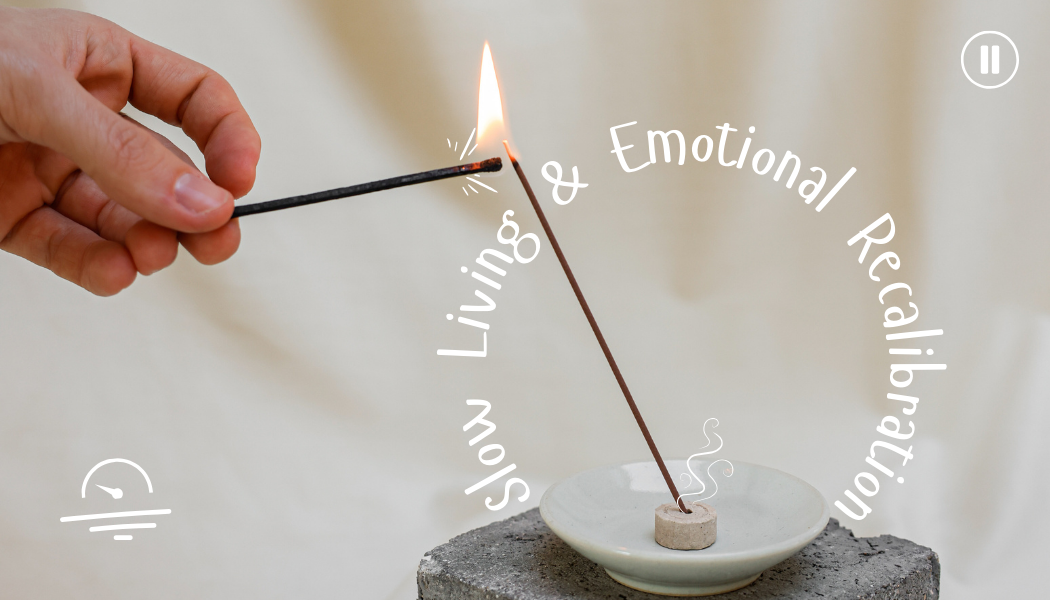
This is where slow living enters - not as a nostalgic aesthetic, but as a form of recalibration.
Rituals that Reclaim
In affluent Indian homes, consumers are reframing everyday acts as meaningful rituals:
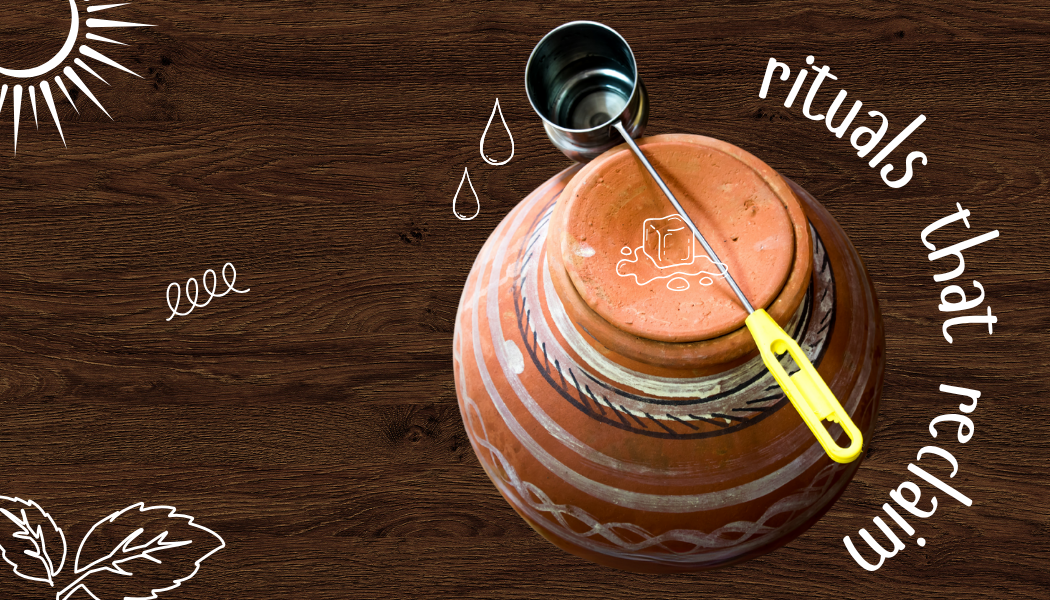
- Re-introducing matka water setups and brass polishing with mitti
- Marking seasonal shifts with tulsi and neem fumigation
- Repairing jharokhas, cane chairs, and heirloom fabrics instead of replacing them
- Introducing compost bins, hand-ground masalas, and clay cookware maintenance
These rituals aren't decorative - they're grounding. They give back rhythm, tactility, and sensory memory to homes that had become hyper-efficient but emotionally neutral.
In this context, slowness is not a lack, it is a form of emotional luxury.
A Class-Enabled Return to Process
It’s important to name what this shift is and isn’t. This is not a return to tradition for everyone. In much of India, slowness is not aestheticized. It’s structural. In rural towns, tier-2 cities, and working-class households, the rituals of care didn’t disappear as much, they simply weren’t optional.
What we’re seeing in urban India is a class-enabled revaluation of the very things it once rushed past: patience, process, presence. A silbatta is no longer just functional, it’s symbolic. A compost bin isn’t just ecological, it’s emotional.
The slow life, as it exists now, is a privilege. But it’s also a cultural signal, one that tells us where desire is moving, especially among India’s most influential consumers.
What This Signals for Culture & Business
As Indian consumers rethink their relationships with home and time, businesses must rethink their language and offerings. Function is no longer enough. Emotional depth matters.
Ask:
- Does your offering enable ritual, not just resolution?
- Can your product create a feeling, not just a result?
- Are you designing for sensorial living, not just surface aesthetics?
Indian consumers are no longer chasing faster. They are choosing to be more intentional. The most valuable service a brand can offer today is not more - but meaning.
In a culture driven by acceleration, the slow life is becoming a quiet form of agency, and the home, its sacred ground. For many Indian consumers, this is no longer about simplicity. It’s about sovereignty over pace, care, and presence.
These weren’t just cultural quirks, they were early signals of Witherwill in motion: a deep desire for fewer to-do lists, more tactile rituals, and slower, sovereign living.
Until next time, Team Plum
Previously on Plum Peels
The Ritual Economy (March 18, 2025) - Click to read We unpacked how post-pandemic beauty evolved into grounding rituals, like oiling hair to decompress and skincare that prioritised calm over correction.
Quiet Signals (April 21, 2025) - Click to read We explored the emotional rebranding of everyday life, with younger Indians naming their “soft era,” “healing hours,” and “main character moments” as ways to resist hyper productivity and embrace emotional honesty.
Loved this edition?
Follow us for more India-first insights into evolving consumer culture! Want to share your thoughts or suggest a topic?
Just hit reply or write to us at hello@plum-insights.com