

The hidden shifts in routines, purchases and expectations that brands must support
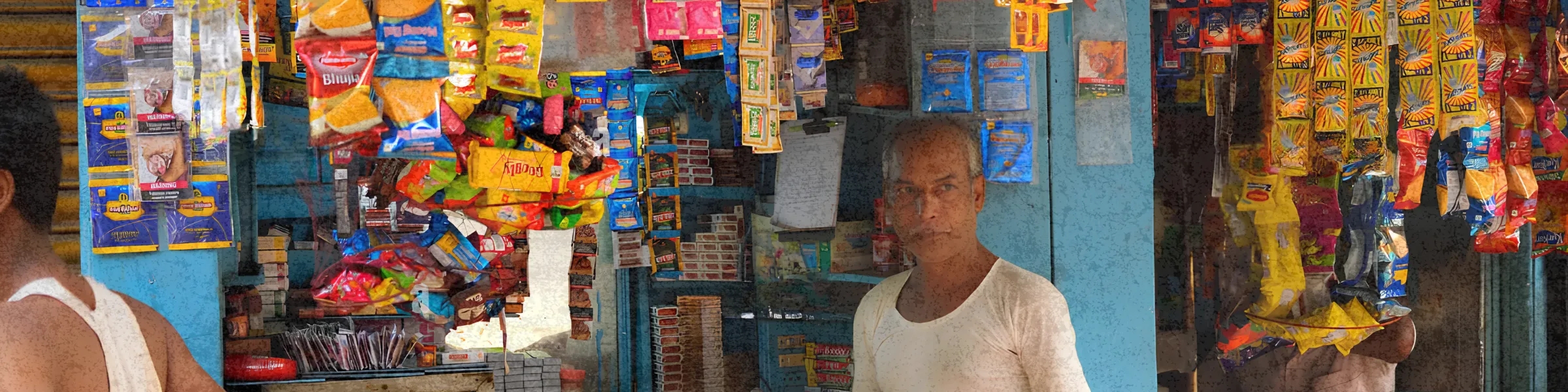
A shopkeeper has a refrigerator with a chocolate brand's logo on the door. It was given to him for free. He keeps it switched off because nobody offered to pay the electricity bill. The chocolate softens on a warm shelf and sticks to its wrapper. A customer picks it up, puts it back and buys a boiled sweet instead.
The shopkeeper would not call this climate adaptation. He would say the product does not last and the bill is too high.
That is the challenge for anyone building consumer products in India today. People are already adapting to longer summers, erratic monsoons, polluted winters and unreliable water and power. But adaptation rarely arrives in consumer data under that name. It appears as a quality complaint, a changed routine or a category losing relevance for reasons nobody states.
We see five distinct modes of adaptation. They are not consumer segments - most households use several at once - but different logics, each asking something different of brands.
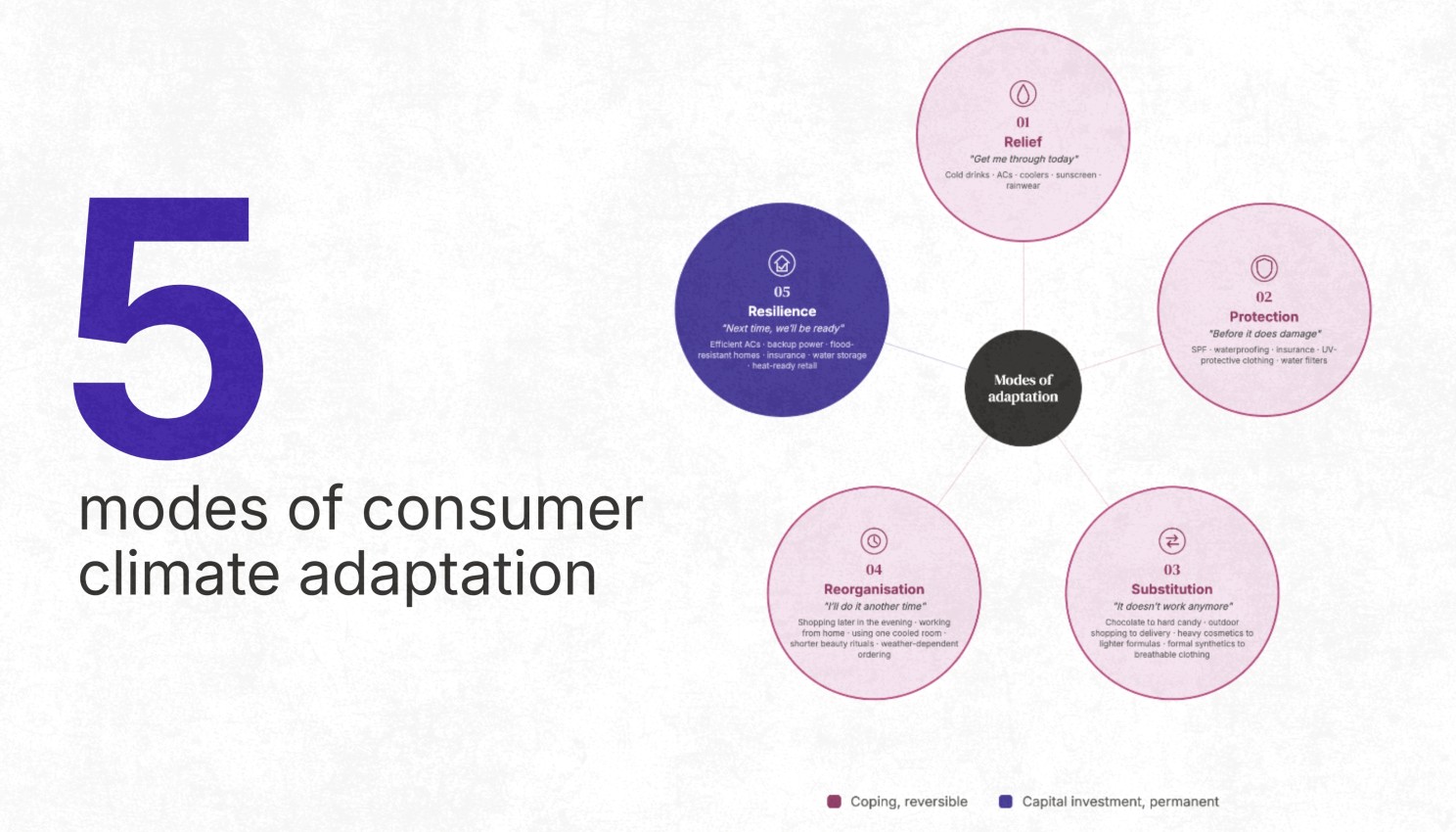
1. Relief: "Get me through today"
Cold drinks, buttermilk, calamine on burning skin, or a few hours in an air-conditioned mall: relief is immediate and reversible.
Increasingly, it is event-triggered rather than seasonal. During extreme heat, demand spikes - and often moves online. Ice cream sales on quick commerce reached roughly ₹560 crore in a single May, up 140% year on year; cold beverages rose 114%. Heat did not reduce consumption. It removed the trip and transferred the exposure to a delivery rider.
For brands, this is an availability challenge: use weather-linked forecasting, flexible replenishment and deeper quick-commerce inventory during heat and rain events.
2. Protection: "Before it does damage"
Consumers are moving beyond comfort to defend the body, home and belongings. Sunscreen is shifting from a morning step to repeated application. Riders now routinely use sleeves, gloves, neck covers and wraparound glasses; some Bengaluru bike-taxi riders have even fitted custom shields to their vehicles.
The industry has started to say this out loud. Jacques Lebel, managing director of L'Oréal India, recently told The Economic Times that the country's intense heat, humidity and varied skin and hair types make it an unusually demanding place to develop beauty products - "a fantastic laboratory and also a torture test" - and that formulations which survive here tend to travel well globally.
What is a laboratory for a manufacturer is daily life for a consumer.
Monsoons generate their own protection market in rainwear, waterproofing and water purification. Smog drives seasonal demand for masks, inhalers and nebulisers.
This consumer is managing a known exposure, not buying reassurance. Brands need verifiable claims, portable formats and prices that make frequent use viable - not merely stronger promises.
3. Substitution: "It doesn't work anymore"
This is the least visible - and most dangerous - mode. When products fail, consumers switch: chocolate to boiled sweets, fresh milk to tetra packs, heavy foundation to lighter formulations, large packs to smaller ones. Outdoor exercise moves indoors; two-wheelers give way to cabs during the worst weeks.
None of this appears as a climate signal. It arrives as it melts, it gets sticky, it doesn't travel or I can't use it outside.
The implication is clear: resilience must extend beyond formulation to packaging, distribution and retail economics. The shopkeeper's electricity bill is a product attribute.
4. Reorganisation: "I'll do it another time"
Households cook before the hottest hours, sleep around one cooler, shop after dark and shorten routines when water is scarce. Runners meet at dawn. Gig workers shift towards evening hours. During bad weather, shopping migrates online.
Reorganisation often creates no new transaction, so brands miss it. Yet it changes when people are reachable and when services are useful. Store, delivery, gym, clinic and salon hours should follow weather-adjusted behaviour rather than a fixed calendar. Media and promotions should do the same.
5. Resilience: "Next time, we'll be ready"
The final mode requires capital: an efficient AC, purifier, inverter, water tank, better-ventilated home, insurance or home gym. A panic purchase during one bad week can harden into a household asset with recurring costs, as air purifiers are beginning to do in Delhi.
But access is unequal. India's AC penetration is roughly 10%; coolers dominate smaller towns because they cost less to buy and run. One family purifies a single bedroom, not the house. Another absorbs the heat physically.
The five modes therefore form a ladder. At the top, a climate problem becomes a purchase. At the bottom, it is paid for through discomfort, lost work or damaged health - and may never appear in market data. The largest opportunity lies in helping more people climb: cooling or purification as a service, rent-to-own appliances, embedded insurance and retailer cooling models that account for energy costs.
Climate change has already entered the Indian household. It simply entered under other names: heat, inconvenience, spoilage, expense and products that no longer work.
For brands, the task is not to sell an environmental position. It is to build relief, protection, reliability and control: a chocolate that survives the shelf, sunscreen worth reapplying, and a cooler the shopkeeper can afford to switch on.
What is climate change already asking your consumers to do differently?
Plum Insights helps brands uncover the hidden shifts in routines, choices and expectations - and turn them into opportunities for innovation.
Write to us at hello@plum-insights.com